A UN Binding Treaty on transnational corporations and human rights: a critical step toward climate justice

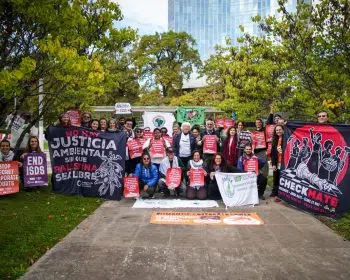
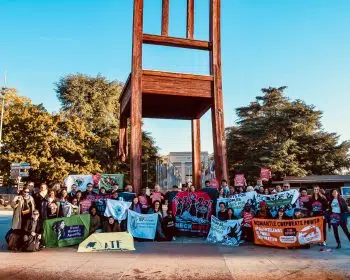
Just ahead of the climate COP30 and Peoples’ Summit in Belém (Brazil) later this year, states will meet in Geneva (Switzerland) for the 11th session of negotiations toward a UN Binding Treaty on transnational corporations (TNCs) and human rights. For over a decade, affected communities together with social and environmental movements have sought to bring to life a treaty that would hold TNCs accountable for their human rights violations. Informal intersessional negotiations for the treaty have been taking place throughout 2025 as Friends of the Earth International, together with the Global Campaign to Reclaim Peoples’ Sovereignty, Dismantle Corporate Power and Stop Impunity, continue to internationalise the struggle against corporate power and for justice.
Transnational corporations are a driving force behind the climate and environmental crises, having constructed an international architecture of impunity to ensure they cannot be held to account. This multifaceted system, built on opaque and often illegal and undemocratic international trade agreements, investor-state dispute settlement (ISDS – private courts of the rich and powerful that hijack justice) mechanisms, intimidation tactics and the systematic denial of justice for affected peoples, has allowed transnational corporations to grow richer and more powerful than the states meant to regulate them.
They benefit from a global economic system that prioritises profit-maximisation over the rights and well-being of peoples and the planet.
Across industries, whether it be fossil fuels, agribusiness, mining, finance or big tech, TNCs are key contributors to a crisis they now also want a say in “solving”. The climate crisis, which they have fueled and profited from for decades, has already resulted in millions of deaths, mass displacement, hunger, disease, conflict and the accelerated destruction of ecosystems worldwide. Without transformative action, these effects are set to worsen exponentially, especially as TNCs continue to push forward false solutions. This threatens the urgent action we need to transform our energy systems to limit future damage and the just transition to renewable energy systems that benefit people and communities, not corporations.
Fossil fuel corporations in particular – those most responsible for driving the climate crisis – were among the first to know of its impending climate impacts and actively funded denialist and disinformation campaigns to prevent it from reaching public consciousness. Today, their strategy has shifted from active denial to greenwashing and delay: minimising the reality and urgency of the climate crisis while positioning themselves at the centre of climate policymaking and continuing to suppress dissent. The power and influence these corporate behemoths exert over media, politics, trade systems and international climate spaces is one of the most significant obstacles to climate justice.
The TNC Lobby and the Binding Treaty
It should come as no surprise that corporate lobbies work tirelessly to weaken, delay and ultimately block the development of strong climate policy. The UN Binding Treaty is no exception. Their presence in the negotiations through the TNC Lobby has become increasingly visible and organised.
The TNC Lobby is composed of global business associations such as the International Organisation of Employers (IOE) and the International Chamber of Commerce (ICC). These entities represent business interests and are therefore the collective voice of corporate power in international fora. They have been systematically participating in the Binding Treaty process, promoting corporate self-regulation and voluntary approaches – precisely the failed models that have enabled the current crisis of impunity.

The IOE and ICC enjoy privileged access to governments and UN spaces, positioning the businesses they represent as “stakeholders” in the process. They relentlessly lobby for language in the treaty that opposes binding obligations for corporations and push for ineffective corporate-led schemes like voluntary human rights due diligence and industry codes of conduct. These associations represent the same corporate interests that are at the heart of the climate crisis, environmental devastation and human rights violations.
“Their strategy is simple: ensure that any treaty remains toothless, non-binding and fully aligned with corporate interests. Their strategy within the multilateral system will always be to weaken processes that could diminish or impact their profits. As for the Binding Treaty, they work to ensure that the instrument is ineffective in regulating the activities of TNCs, enabling TNCs to evade justice and preserving the architecture of impunity, which is key to keeping the capitalist system in place.”
– Letícia Paranhos, Friends of the Earth International
Allowing the architects of the climate crisis and global corporate impunity to shape the rules meant to hold them accountable is a profound and dangerous conflict of interest. It undermines the very purpose of the Binding Treaty and the demands of the affected communities who are fighting for it.
Climate justice is a human rights struggle, and affected communities are leading it
Climate justice is fundamentally a human rights struggle. The destruction wrought by transnational corporations has direct and devastating impacts on the human rights of peoples around the world: the right to life, to health, to land, to water, to food, to a safe and healthy environment and self-determination.
Indigenous Peoples, peasants, forest communities, fisherfolk, workers, women and youth, especially in the Global South, are already living on the frontlines of this crisis. They face the brunt of climate impacts while having contributed the least to the problem. They are also systematically targeted by corporate violence and repression when they resist destructive projects or defend their territories.
Yet these communities are leading the global movement for climate justice. Around the world, they defend forests, land and water, and many are building sustainable pathways rooted in justice, traditional knowledge, agroecology, community rights and real democratic participation. These have been the strongest voices calling for access to justice and corporate accountability through the UN Binding Treaty.
The leadership of affected communities is deeply important to the negotiations:
“The testimonies and demands of affected communities remind negotiators, governments and delegates that behind the legal texts are real lives, lands and cultures being destroyed by corporate power. Both for affected communities and ourselves, the Binding Treaty is not an abstract legal project but a vital tool of resistance and instrument of justice.”
– Erika Mendes, JA! / FoE Mozambique
This is desperately needed in a time when national and regional legal systems too often fail to deliver accountability when corporations operate transnationally. It is a demand for global rules that put peoples’ rights and the planet above corporate profits.
The path forward: From Geneva to Belém, life over profit
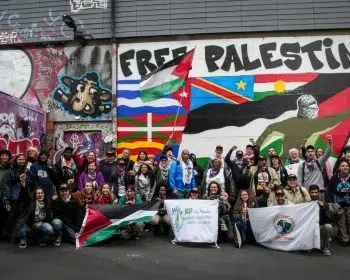
As state delegates arrange to negotiate the treaty text in Geneva in October, social and environmental movements, organisations and affected and Indigenous Peoples are mobilising on the road to Belém for COP30 and the Peoples’ Summit. The message is clear: to achieve climate justice, we need to end corporate impunity.
The struggle for a Binding Treaty is part of the broader fight to dismantle corporate power and reclaim peoples’ sovereignty. It is inseparable from the struggle to achieve system change and real solutions to the climate crisis rooted in equity, justice and ecological sustainability.
As we near COP30 and the Peoples’ Summit, Friends of the Earth International will continue to stand with affected communities, demanding life over profit. We will continue to expose corporate capture of both climate policy spaces and spaces that seek to end corporate impunity.
The Binding Treaty on transnational corporations and human rights goes beyond closing legal loopholes, it is an expression of our resistance against corporate power, our fight for climate justice and our commitment to system change.